How Rechargeable Hearing Aids Handle Hot Weather
If you’ve ever left something in your car during an Albuquerque

By: admin | May 18, 2026
You are at a restaurant with friends, following the conversation just fine until the table next to you gets loud. Suddenly you can hear that people are talking, but you cannot quite make out what they are saying.
If you got a hearing test, it would likely come back completely normal. You might be experiencing hidden hearing loss.
Standard hearing tests measure whether you can detect soft tones in a quiet room. They do not capture what happens when your brain and auditory nerves are trying to process sound in real-world conditions.
The issue often comes down to changes in the nerve fibers that carry auditory impulses from the ear to the brain. Understanding why this happens is actually the first step toward doing something about it.
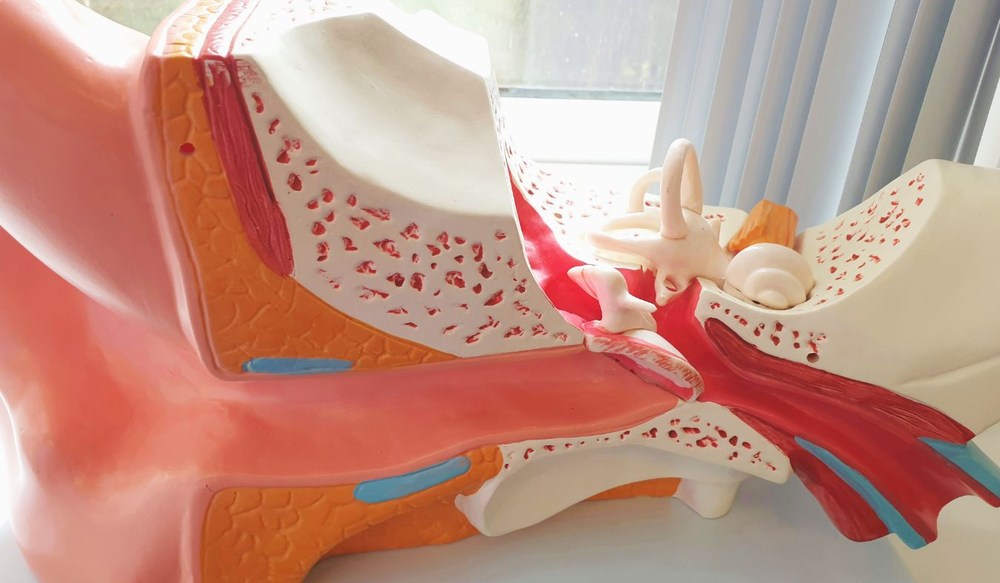
Your ears are constantly at work, taking in sound waves from your surroundings and turning them into electrical signals through tiny, delicate hair cells in the inner ear.
Once those signals are created, they travel along the auditory nerve and move through several processing steps before reaching the brain.
From there, your brain takes on the role of organizer, sorting through all that information so you can make sense of what you’re hearing. It helps you pick out speech in a crowded room and focus on important sounds while filtering out background noise that might otherwise be distracting.
Hidden hearing loss refers to hearing difficulties that do not show up on a standard hearing test. You might pass your hearing test without any issues but still struggle to follow conversation.
The problem is not whether you can hear that someone is talking. It is whether you can make out what they are saying when there is competing noise around you.
This happens because standard hearing tests are only designed to measure how well you detect tones at different volumes and frequencies.
They cannot measure how well your auditory nerve fibers are carrying sound information from your ear to your brain. When those fibers are damaged, typically from noise exposure over time, that signal processing breaks down in ways a routine test will never catch.
Most people think of hearing loss as a volume problem. Sounds are too quiet, certain frequencies are harder to pick up and a routine evaluation confirms it. Hidden hearing loss does not follow that pattern.
Your ability to detect sounds can be completely intact, which is why it does not show up on a standard audiogram. The difference lies deeper in the auditory system, in the nerve fibers that carry sound signals from the inner ear to the brain.
With more common types of hearing loss, the hair cells in the inner ear are damaged. With the hidden variety, those hair cells may be perfectly healthy, while the fibers connected to them fail to transmit as they should.
Stress and fatigue can change the way you detect sound, even if your hearing hasn’t technically changed.
When you’re worn down or under pressure, your brain has a harder time sorting through what you’re hearing, so voices can feel less distinct. It often takes more effort to follow conversations, and that extra strain can make listening feel draining instead of automatic.
You might notice yourself losing track of what someone said mid-sentence, not because the sound wasn’t there, but because your focus and processing are strained.
Sometimes the earliest shifts in hearing aren’t about volume – they’re about clarity and how much effort it takes to keep up. Things may sound present, but not always distinct, especially in listening situations.
Here are some signs that may point to hidden hearing loss:
This shows the softest sounds you can hear. You may also repeat words played in a quiet space. That part looks at how clearly speech comes through.
These results give a comprehensive overview of your hearing and basic speech understanding. But they don’t reflect how listening feels.
Real life often includes background noise and multiple voices. In those settings, listening can take more effort. Even when test results fall within a normal range, you may still notice something is off.
Hidden hearing loss is often missed because it doesn’t always present in ways that are easy to measure or immediately obvious. Early detection matters because it can provide a better understanding of how the auditory system is functioning before those changes become more disruptive.
It also provides context for why certain situations may start to feel more demanding than they used to, allowing for an overview of your overall hearing health.
Standard hearing tests often focus on whether sounds can be detected at different volumes, but professional audiologists can go further when results don’t match a person’s experience.
They may use speech-in-noise testing, where words are played with background sound to see how speech is understood when other sounds are present. Another common method is extended high-frequency testing, which checks hearing beyond the range of a standard audiogram.
In certain cases, auditory brainstem response testing is used to track how sounds travel from the ear to the brain. These tools give a more complete view of how sound is being processed, especially when basic screening results look normal.
Communicating in noisy places can be difficult if you have trouble following speech. Try facing the person you are talking to and watching their lips for signs about what they are saying.
Moving to a quieter spot or asking others to speak clearly and at a steady pace can also help. Using simple hand signs or repeating key words can make sure everyone understands each other.
These strategies often make conversations less stressful and help you feel more included. While it may feel awkward at first to ask for changes or repeat yourself, practicing these approaches can improve your confidence.
Protecting your hearing doesn’t require complicated changes – just a few smart habits you can work into your day. Small adjustments in how you listen, move through noisy spaces and manage sound exposure can help protect your ears
Simple lifestyle habits that can help protect your long-term hearing health include:
A conversation with an audiologist does not have to mean something is seriously wrong. It is simply a way to get a clearer picture of what is going on.
For hidden hearing loss specifically, a standard hearing test may not be enough to surface the full picture. Which is why waiting to see if things improve on their own is not always the most useful approach.
An audiologist can ask the right questions and recommend more targeted evaluations that go beyond what a routine screening is designed to catch.
Hidden hearing loss occupies a space that standard testing was not built to address, and understanding that is a useful starting point.
Knowing that this type of hearing difficulty exists and that it works differently from what most people picture when they think about hearing loss puts you in a much better position to make sense of what you have been experiencing.
The team at Albuquerque Hearing and Balance in Albuquerque, NM works with individuals dealing exactly these kinds of questions and can help figure out what kind of evaluation makes sense for what you are experiencing. If you want to learn more about hidden hearing loss, get started by calling us at (505) 750-9569.

If you’ve ever left something in your car during an Albuquerque
By: admin | August 24, 2026
You are at a restaurant with friends, following the conversation just fine
By: admin | May 18, 2026
Older hearing aids made you do a lot of the work. When you walked into a
By: admin | March 25, 2026